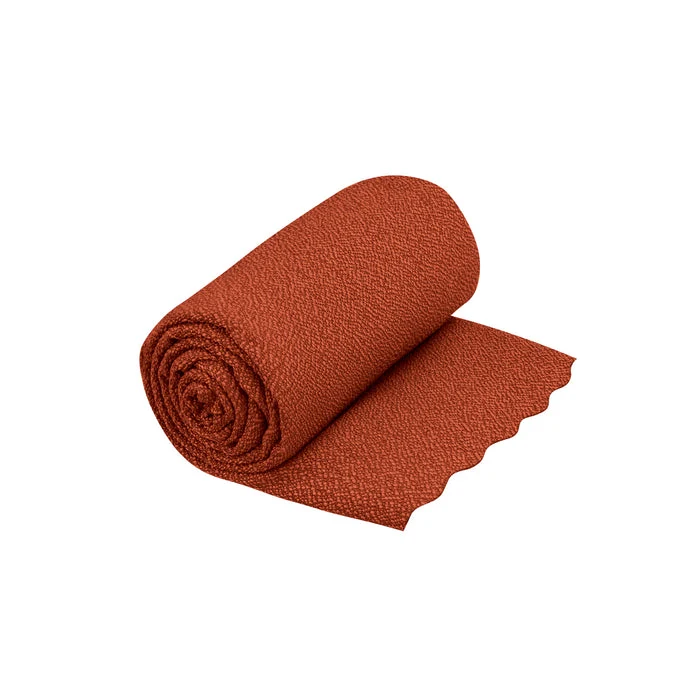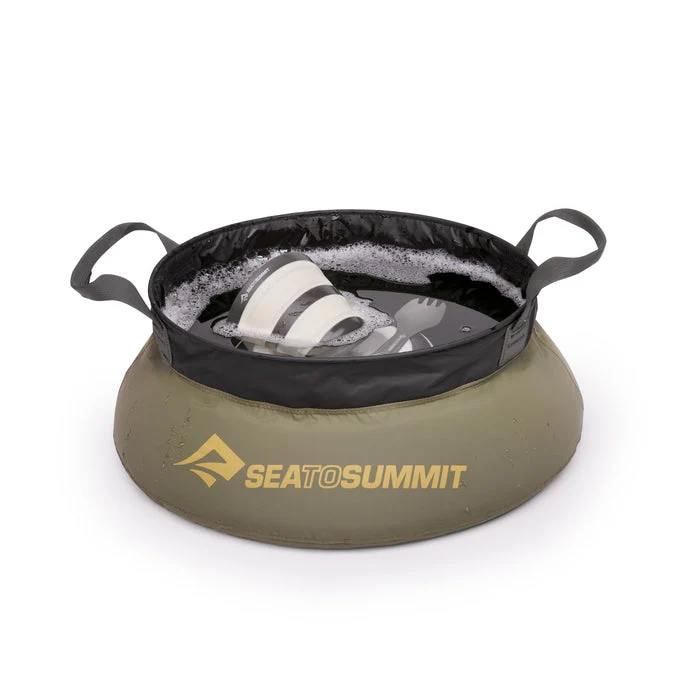
A proper camp wash basin doesn't have to occupy the same amount of space on the way home as it does during dinner cleanup. The Sea to Summit Kitchen Sink folds into a small storage pouch.
Sea to Summit uses recycled 70D nylon with taped seams, a wide base, and a rigid rim. The aim is a soft-sided sink that keeps its shape when filled. That combination is more useful than a simple fabric bucket when you want to put dishes down and wash them.
The Structure Behind the Fabric
- Wide base: Supports the basin on a suitable surface.
- Rigid rim: Helps hold the opening in shape.
- Webbing handles: Provide a carrying point.
- Storage pouch with drain hole: Keeps the packed sink organized.
Choose the Size for the Dishes
I would check the selected capacity and dimensions against the actual cookware, not just how much water the sink holds. A pot with a long handle may need more room than expected. Small plates and utensils are easier to manage in a modest basin.
The sink can also help keep washing away from sensitive water sources, with wastewater handled according to the location's rules. A contained basin makes that process more deliberate than washing directly in a creek.
A Different Feel From a Rigid Tub
Fabric saves storage space but asks for care around sharp utensils, hot cookware, and rough ground. Sea to Summit lists compatibility with detergent and hot water up to 140°F. That is different from boiling-water use, so I would follow the current temperature instructions.
This sink suits campers who use real cookware often enough to want a wash station and still care about packed bulk. If the kitchen box has plenty of space, a rigid tub may be simpler to handle.
I would choose the Sea to Summit design for its compact storage and shaped rim, then give it time to dry before putting it away for the season.