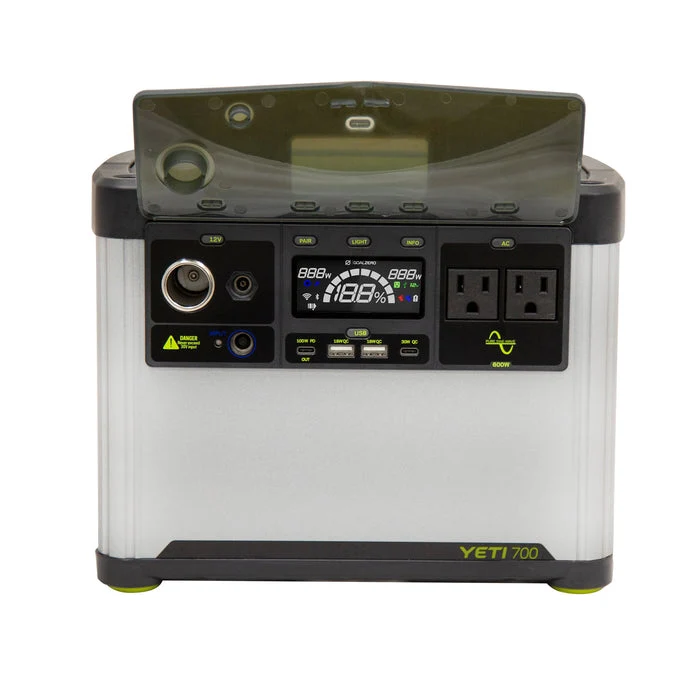
The middle of a power-station range can be the sensible choice when neither pocket size nor maximum capacity is the goal. The Goal Zero Yeti 700 provides a listed 677.37Wh reserve at 20.3 pounds.
A Reserve You Can Plan Around
I'd compare it for a vehicle-based trip or a selective household charging setup. The important next step is listing the actual loads and checking the exact output ratings. Stored watt-hours tell us how much energy is available in principle, not whether every appliance can be started.
- Capacity: 677.37Wh.
- Chemistry: LiFePO4.
- Weight: 20.3 pounds.
- Operation: Pass-through charging is listed.
Charging and Operating Temperatures Differ
The published specification separates charging from discharging temperature ranges. I'd follow that distinction when using the station in cold weather. A unit that can supply power at a low temperature doesn't necessarily permit charging at the same temperature.
For AC charging, the manufacturer lists 500W fast input and a lower default mode. The lower mode may suit the available supply, while fast input can shorten a refill under the right conditions. Choose deliberately rather than assume the highest setting is always appropriate.
Check the Generation and Accessories
This is the current-generation Yeti 700 described with LFP chemistry. Compatible solar inputs and accessories should be matched to this specific station. The input specification includes a defined voltage range, so a connector fitting physically isn't enough to establish electrical compatibility.
The weight may be reasonable between a vehicle and campsite, but it isn't a trivial addition to a walking load. I'd plan where it sits and how it will be lifted.
I haven't tested this station. I'd compare Yeti 700 when the capacity is enough for a measured device list and a larger battery would add unnecessary weight. If the goal is extended high-draw appliance use, a larger reserve and replenishment plan deserve attention.