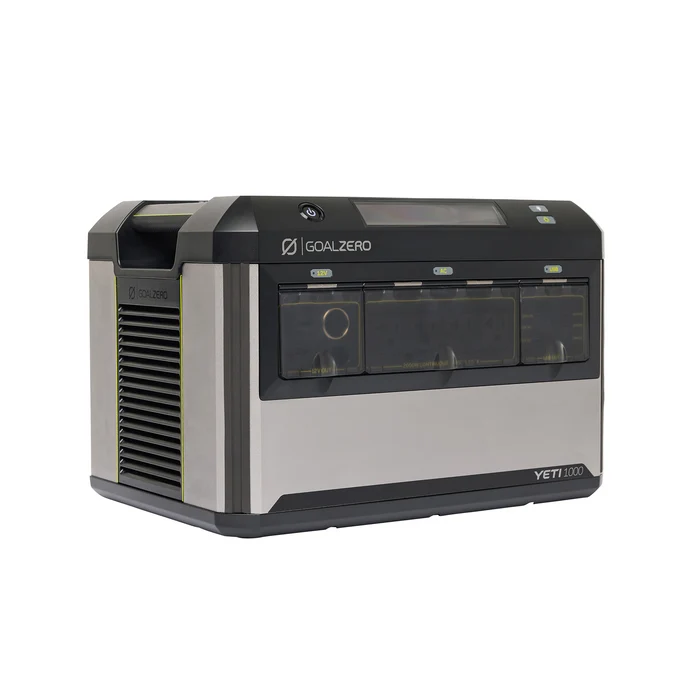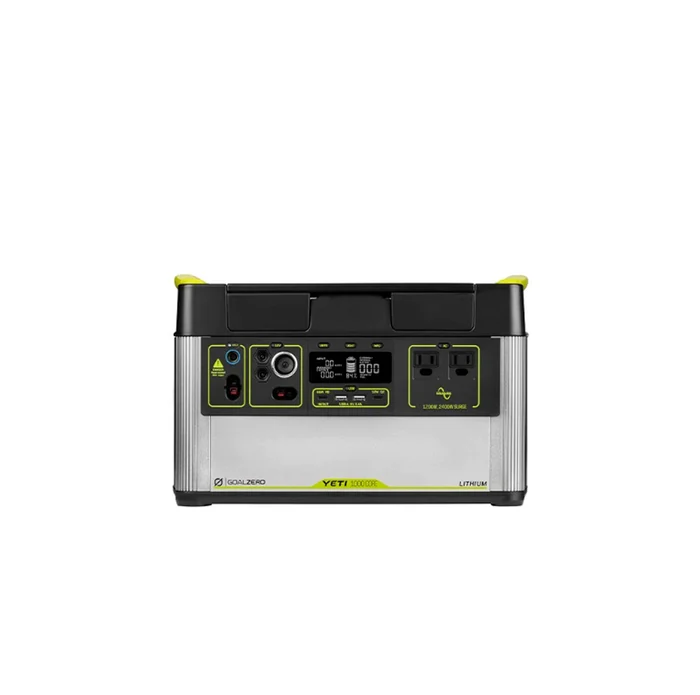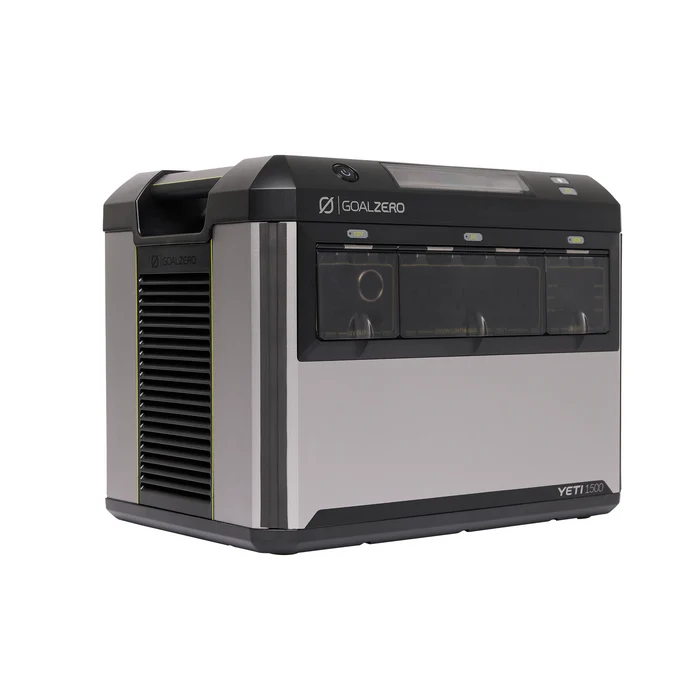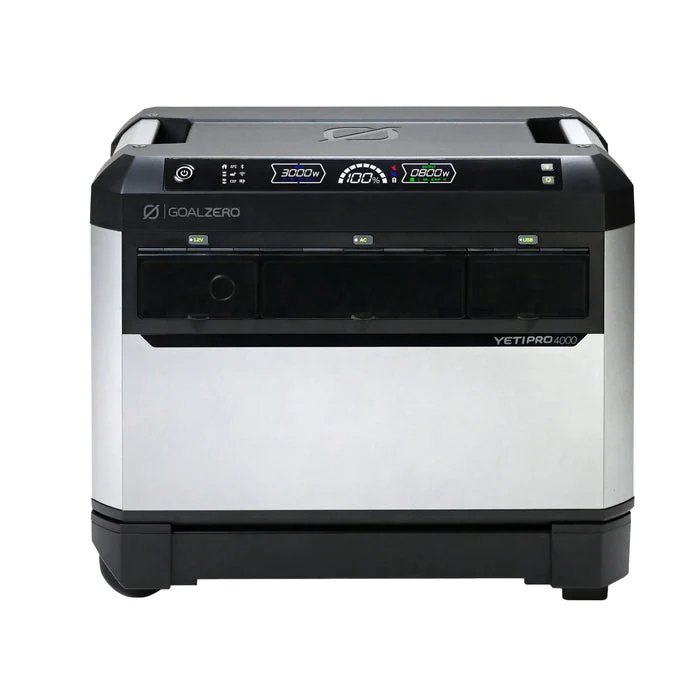
There is a point where a portable power station becomes equipment you position deliberately. The Goal Zero Yeti PRO 4000 is in that class, pairing a large battery reserve with a listed 3,600W output.
Start With the Heavy Loads
Goal Zero lists a 7,200W surge rating alongside the normal output. I'd compare those figures with actual appliance requirements, including starting behavior. A broad claim about home appliances isn't enough to establish that every specific device or combination will work.
- Continuous output: 3,600W.
- Surge: 7,200W.
- Battery class: Approximately 4kWh.
- Cell chemistry: LiFePO4.
Capacity Is Meaningful, but Still Finite
A large reserve can support a longer plan or more devices than a small station. High-demand equipment can also use it surprisingly quickly. I'd rank essential loads and measure their consumption before assigning an expected backup period.
Expansion and accessory options should be priced as a complete system. A maximum expanded capacity isn't the energy in the basic unit, and additional batteries need both storage and connection arrangements.
Think About Charging and Movement
The published description lists up to 1,800W AC input. Refilling at that rate requires an appropriate supply and setup. Solar charging introduces panel compatibility and daylight conditions as separate planning questions.
The product is substantial enough that moving it, reaching its controls, and keeping ventilation space available belong in the purchase decision. I'd check the exact weight and supplied transport equipment for the version ordered rather than treat the word portable as a promise of easy lifting.
I haven't tested Yeti PRO 4000. I'd compare it for someone planning selective home backup or a serious vehicle-based energy setup. If the load list is mostly phones and a laptop, its output class and physical scale are far beyond what those jobs require.